Best Time of Day to Run in Summer: Read the Dew Point, Not the Thermometer
The best summer run time depends on dew point, sun exposure, and heat stored in pavement, not the air temperature alone. Here is how I choose between a morning and an evening run, hour by hour.

Short answer
The best summer run time is usually early morning, when dew point and heat stored in pavement are lowest, not simply when the air temperature reads coolest. Evenings often trap humidity and radiant heat even as the thermometer drops. Check the dew point hour by hour and pick the window where it sits lowest.
The first hot week of last summer I moved my runs to the evening, because the evening is supposed to be the cooler option. One night I went out just past eight: the temperature was a good five degrees down off the afternoon, and the run was harder than the mornings I was trying to avoid. Heart rate too high for the pace, legs heavy. I had chosen the hour by temperature. I should have been reading the dew point.
This is the trap with timing a summer run. Temperature is not the number that decides how it feels. Dew point is. It tells you how much room the air has left for your sweat to evaporate into, which is the main way you cool yourself, and unlike temperature it does not follow a tidy daily curve: it can keep climbing into the evening as the thermometer falls. The National Weather Service makes the same point about dew point versus relative humidity: the dew point, not the humidity percentage, tells you how the air will really feel.
The short version
If you want a default, run near sunrise: lowest air temperature, almost no sun. But that is a default, not a law. Some mornings are already "sticky" at 6am, and some evenings drop enough dew point to beat them. The hour you want is the lowest temperature and dew point together with the least sun, not simply the coolest. The clock is not the thing you are reading. The air is.
Summer heat stress is not one number
What you feel on a run is the sum of a few things, and any one of them can turn an easy run into heart-rate drift and misery.
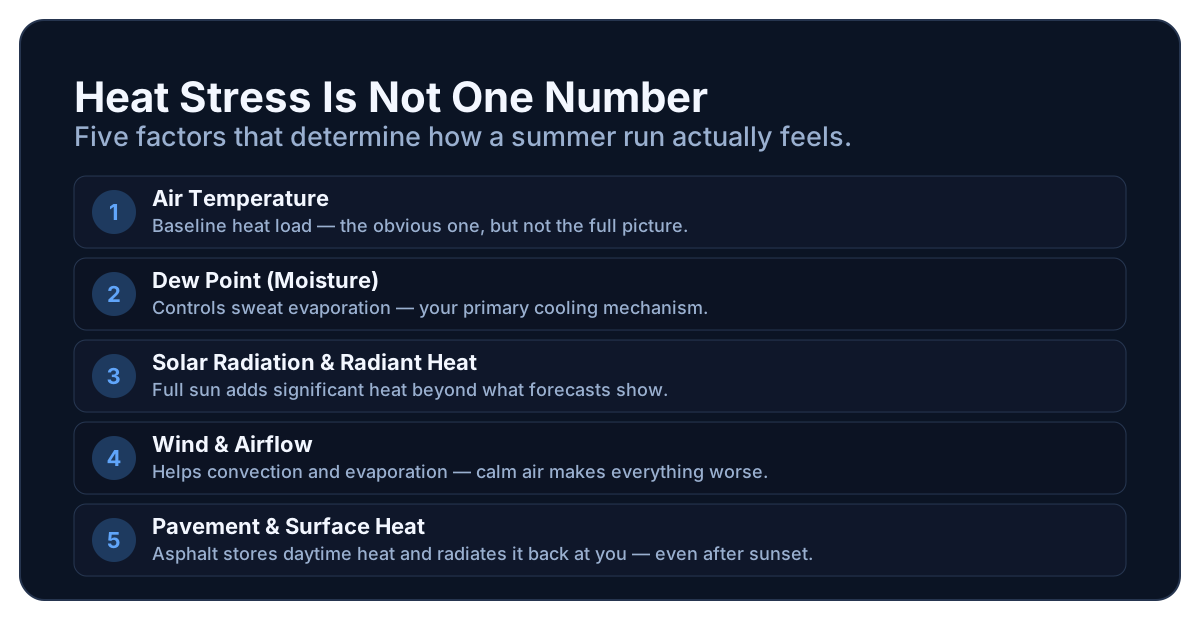
Based on NOAA, OSHA, and ACSM heat-stress guidance.
Temperature is the obvious one: lower air, less baseline load. Dew point is the moisture load, the temperature at which the air would saturate without losing any water, and the NWS definition is plain about it, a higher dew point means more moisture already in the air. Sweat only cools you when it evaporates, and air already loaded with vapor has no room left to take yours.
Then the sun. Heat index numbers are written for shade and light wind, so full sun makes the real load higher (CDC/NIOSH), and the heat does not leave at sunset: roads and other surfaces keep radiating beyond what a forecast captures (OSHA). Wind is the one that helps, which is why a calm, humid evening feels worse than the same numbers with a breeze. The best single summary, if you can get it, is WBGT (wet bulb globe temperature), which folds humidity, radiant heat and wind into one figure (OSHA). You do not have to calculate it: compare hours with moisture and sun in mind, not temperature alone.
Dew point keeps its own schedule
Temperature runs on a clean daily curve. Dew point does not. It moves more slowly than relative humidity and shifts with where you are and what the weather is doing: fronts, storms, irrigation, vegetation, the coast.
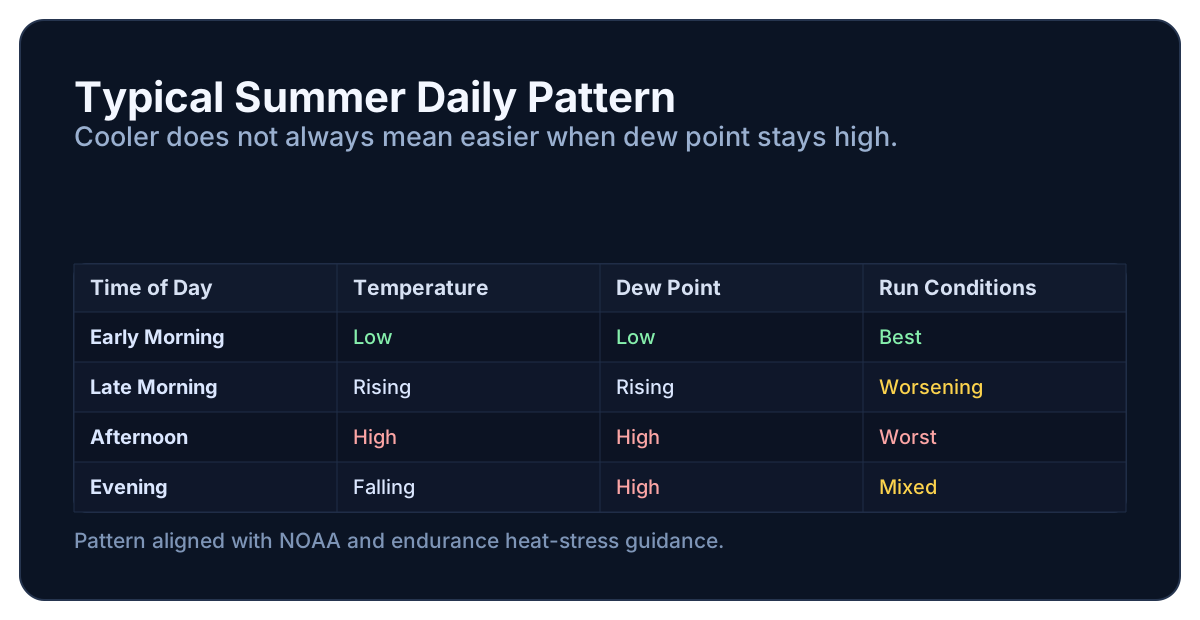
Chart aligned with NOAA and endurance heat-stress guidance.
A National Weather Service dew point climatology for the Wichita area describes patterns that catch most runners out: dew point climbing before sunset as the air stops mixing, and a warm-season tendency for the day's lowest dew point to land in the evening rather than at dawn. So "mornings are always drier" is not something you can trust everywhere. Do not assume the dew point is lowest at dawn. Look at the actual number, hour by hour.
Morning against evening, side by side
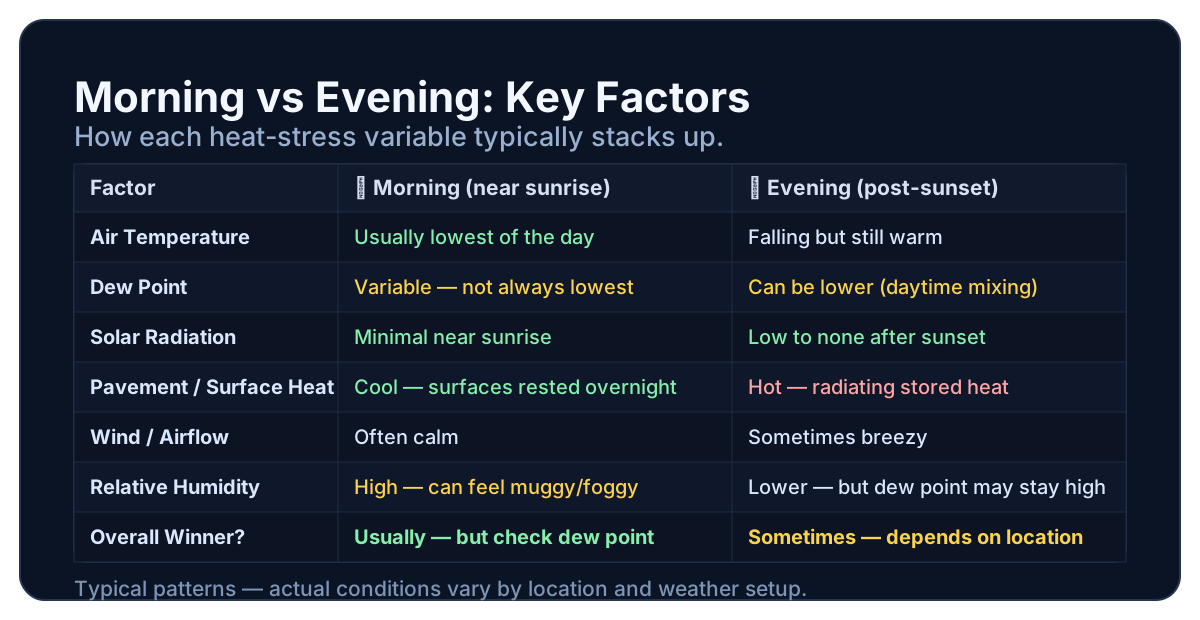
Typical patterns. Actual conditions vary by location and weather setup.
Morning runs: when they win, and when they do not
Mornings usually stack three things in your favor: the lowest air temperature, the least direct sun, and the least heat stored up in the asphalt. Even when the morning dew point is not much lower than the evening, that cooler air still pulls down the total strain.
But the morning is not a guarantee. Cooler air holds less water vapor, so it often shows high relative humidity: NOAA explains that for the same underlying moisture, cooler air reads higher on relative humidity than warmer air does. This is exactly why humidity percentage is a poor guide and dew point is the honest one. You can wake to fog and near-100-percent humidity and still get a perfectly runnable morning, because the dew point itself is low. The reverse is the one that hurts: if the dew point is already high, 65°F (18°C) or above, you get the familiar story whatever the thermometer says, sweat that will not evaporate, a climbing heart rate, a pace that feels far harder than it should.
Evening runs: when they win, and when they disappoint
Evening is genuinely the better call when the dew point drops away from the afternoon, the sun is low or gone, a breeze comes up, or your route runs through shade. In some places, as that Wichita climatology shows, the dew point is actually lower in the evening than first thing, after the air has spent the day mixing.
When the evening disappoints, it is usually one of these:
| Problem | Why it matters |
|---|---|
| Dew point stays high even as temperature drops | You expected relief but evaporation is still blocked |
| Airflow drops | Calm conditions feel worse than breezy heat |
| Pavement radiates stored heat | You're getting heated from below, not just above |
| Urban heat island effect | Buildings and surfaces stay warm longer |
OSHA warns plainly that weather reports do not account for radiant heat off surfaces like roads, worth remembering for a sunset run on asphalt that still feels like an oven.
How I actually choose the hour
Before a summer run I work through four quick things. It takes a couple of minutes.
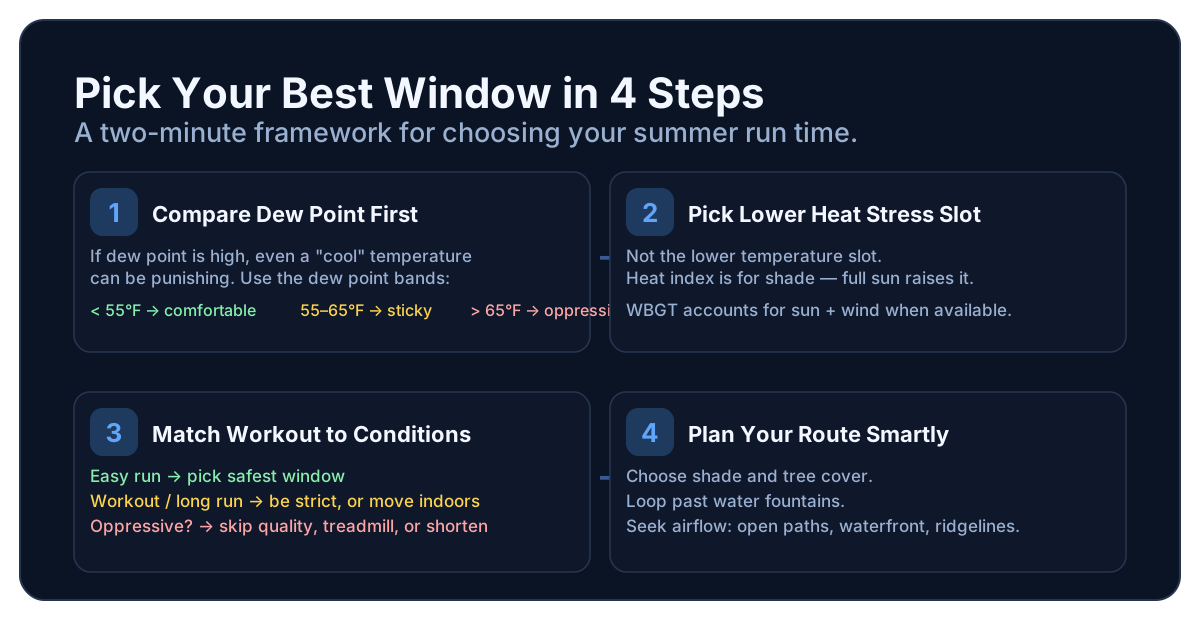
A quick way to choose your summer run time.
First, dew point before temperature. A cool-ish temperature can still punish you if the dew point is high, so it is the filter that goes first. NOAA and the NWS use much the same comfort language for the bands:
| Dew point range | Comfort level | Running impact |
|---|---|---|
| Below ~55°F (13°C) | Dry, comfortable | Run as planned |
| 55–65°F (13–18°C) | Increasingly sticky | Adjust pace or effort |
| Above 65°F (18°C) | Very humid | Shorten, slow, or move indoors |
Second, the lower heat-stress hour, not the lower temperature hour. If all I have is heat index, I remember it is written for shade and light wind, and full sun pushes it up a long way (CDC/NIOSH). If I can see WBGT, I trust it more, because it already accounts for sun and wind (OSHA).
Third, I match the run to the day:
| Workout type | Approach |
|---|---|
| Easy run | Pick the safest, lowest-stress window |
| Workout or long run | Be stricter; high dew point + sun = sauna |
| Very humid conditions | Move quality sessions indoors or reschedule |
If the dew point or the heat stress looks oppressive, I move the quality session or take it inside. You are not losing fitness by doing that. You are choosing a stimulus you can actually control.
Fourth, the route is part of the decision. On a tougher day you cut the load by design: stay in shade, loop past water fountains, skip exposed asphalt, pick paths where the air moves. Sun and heat-absorbing surfaces push the real heat stress above what the shaded forecast tells you (OSHA).
When both morning and evening are bad
Some days the dew point is high from dawn to dark, after rain or near the coast, and there is no good hour to find. Those days are not about toughing it out. They are about changing the run instead of forcing it.
| Strategy | Why it works |
|---|---|
| Run shorter and slower (effort-based) | Reduces total heat generation |
| Split the run (two short sessions) | Less time per exposure |
| Swap intensity for an easy run | Lower heat output, same aerobic benefit |
| Treadmill for key workouts | Controlled environment, no sun or surface heat |
| Hydrate + replace sodium for longer efforts | Maintains cooling and prevents cramping |
And know the warning signs. An ACSM brochure on exercising in hot environments lists confusion, dizziness, very rapid breathing, heavy sweating followed by a decrease in sweating, and an unusually high heart rate. If any of that shows up, stop early and cool down. None of it is worth a training run.
Why RunWeather puts the hours side by side
Most weather apps lead with temperature and humidity, the two numbers that matter least to a runner timing a hot day. I built RunWeather because I was tired of opening three tabs and doing this comparison in my head before every run. It scores the hours against each other on dew point and heat stress, points me at the window that is actually best rather than merely coolest, and says when the honest move is to wait, shorten, or go inside. I wanted to stop guessing at the clock and start reading the air.
Sources and further reading
Meteorology and heat metrics
- National Weather Service: dew point vs relative humidity and comfort guidance
- NOAA NESDIS: humidity, relative humidity, and dew point explanation
- National Weather Service (Wichita): dew point climatology and diurnal behavior example
- CDC/NIOSH: heat index is defined for shade/light wind and sunshine can raise it; WBGT recommended when possible
- OSHA: limits of weather-reported heat index and why WBGT is used, including sunlight and heat-absorbing surfaces
Exercise physiology and safety
- Périard et al. (Physiological Reviews): Exercise under heat stress
- ACSM consumer brochure: Exercising in hot and cold environments
Related reading
- Dew Point for Running
- How Much Slower Should You Run in Heat and Humidity?
- Hydration and Sodium for Hot Runs
- Treadmill vs Outdoor Running: A Decision Framework
RunWeather is available now on the App Store and Google Play.