Treadmill vs Outdoor Running: A Decision Framework for Extreme Weather
Know when outdoor conditions are no longer productive and how to choose treadmill vs outside runs using weather thresholds.
Short answer
Move indoors when outdoor conditions stop being productive: a very high dew point, dangerous heat or cold, ice, or poor air quality that turns an easy run into a grind. The treadmill protects the quality of key sessions on extreme days; outside still wins when conditions are merely uncomfortable, not unsafe.
There is a particular stubbornness that runners mistake for toughness, and I had it for years. If a workout was on the calendar it happened outside, and if the air was thick enough to chew, I took that as a challenge rather than information. The session I remember most was a tempo I dragged through a 75°F morning at a dew point near 74, where I could not hold goal pace for a single rep, my heart rate sat ten beats over where it belonged, and I limped home having earned nothing but a few rough days of recovery. That run was not hard training, it was damage I then had to recover from.
There is a real line between toughing out hard conditions and running in conditions that quietly wreck the workout. Learning where that line sits, and what to do when you cross it, is most of what this comes down to. Here is how I decide now between staying outside, easing the run off, and just going to the treadmill.
When outside stops being worth it
A run loses its training value when it crosses from hard conditions into conditions that sabotage the work. Mild heat, dew point in the 55 to 60°F (13 to 16°C) range, is productive: it builds heat acclimatization and a bit of mental callus. Past a point it stops being training and turns into attrition. The rough thresholds I watch:
- Dew point above 65°F (18°C): quality sessions lose their stimulus, you cannot hold prescribed paces, heart rate drifts, and recovery takes longer.
- Dew point above 70°F (21°C): even easy runs turn into survival. The 2022 analysis of 1,258 races found performance falls 0.3 to 0.4 percent for every degree of WBGT above the optimal window, and that is with aid stations and medical support.
- Heat index above 90°F (32°C): the National Weather Service calls this extreme-caution territory, and above 105°F (41°C) the risk of exertional heat illness climbs sharply.
Three things are not judgment calls, they are automatic. Lightning within 10 miles, get indoors. Air quality index above 100, because hard breathing drives particulates deep. Windchill below -20°F (-29°C), where exposed skin is at risk within minutes.
Why the treadmill is sometimes the better tool
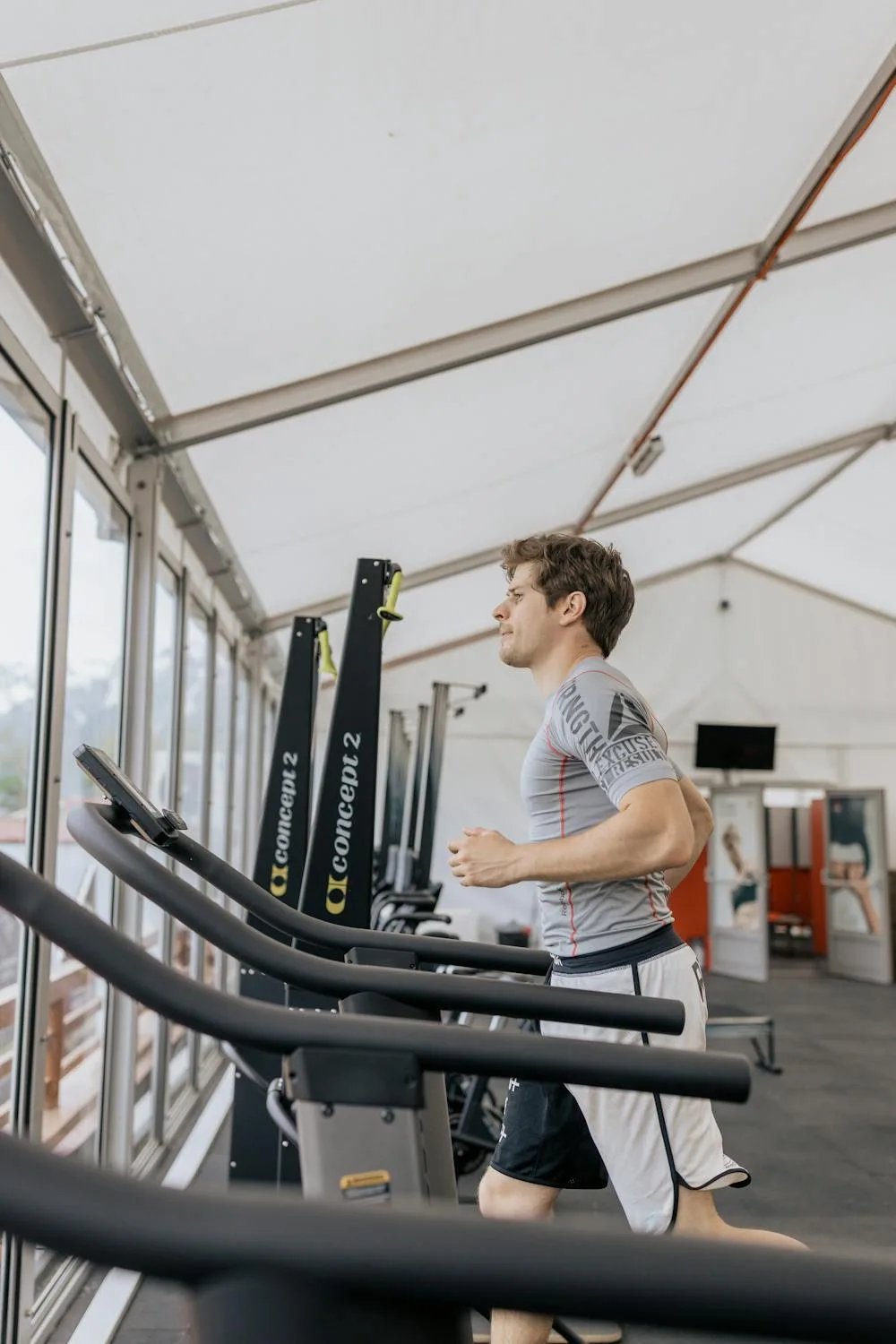
The treadmill has an image problem: the last resort, the boring belt, somehow less real. On a bad day that is backwards. Indoors your cooling system actually works, sweat evaporates, core temperature holds, and heart rate tracks the workload instead of the weather. A tempo run at what would be 80°F (27°C) dew point outside delivers the stimulus you came for, instead of spending half your cardiac output on cooling. The pace is yours to set and the belt holds it, so you stop bleeding the last twenty minutes of a session into a survival shuffle because the air beat you.
The research points the same way. The RunningWritings analysis found heat and humidity compound, hot and humid far worse than either alone, and in truly bad conditions even strong runners lose 8 percent or more. Plenty of coaches move the key sessions indoors on those days, because the workout quality in air conditioning beats anything available outside.
When outside still wins
The belt is a tool, not a default. When the dew point is below 55°F (13°C) and the temperature is reasonable, outside is the better run every time, for the terrain, the changing scenery, and the simple feel of it, so chase those days. If you are training for a road race you also need real time on pavement, because a treadmill does not replicate the surface, the wind, or the camber your race will throw at you. A light breeze is genuine cooling that the forecast undersells, so a moving-air day outdoors can beat what the dew point suggests. And some runs are not about the stimulus at all, the easy shakeout, the recovery jog, the run you take to clear your head, and in the moderate 55 to 65°F (13 to 18°C) range those stay fine, even restorative, outside. The point is to match the run to the day, not to make one permanent inside-or-outside ruling.
How I actually decide
Three buckets, which is what the chart below comes down to:
- Stay outside when the dew point is below 60°F (16°C), the heat index is below 85°F (29°C), and there is no storm or air-quality flag. Run as planned.
- Ease it off when the dew point is 60 to 65°F (16 to 18°C) or the heat index is 85 to 95°F (29 to 35°C). Run by effort instead of pace, cut the distance, push it to early morning or late evening, carry water.
- Go inside when the dew point is above 65°F (18°C), the heat index is above 95°F (35°C), or there is lightning, an AQI over 100, or dangerous windchill. Treadmill, no negotiation.
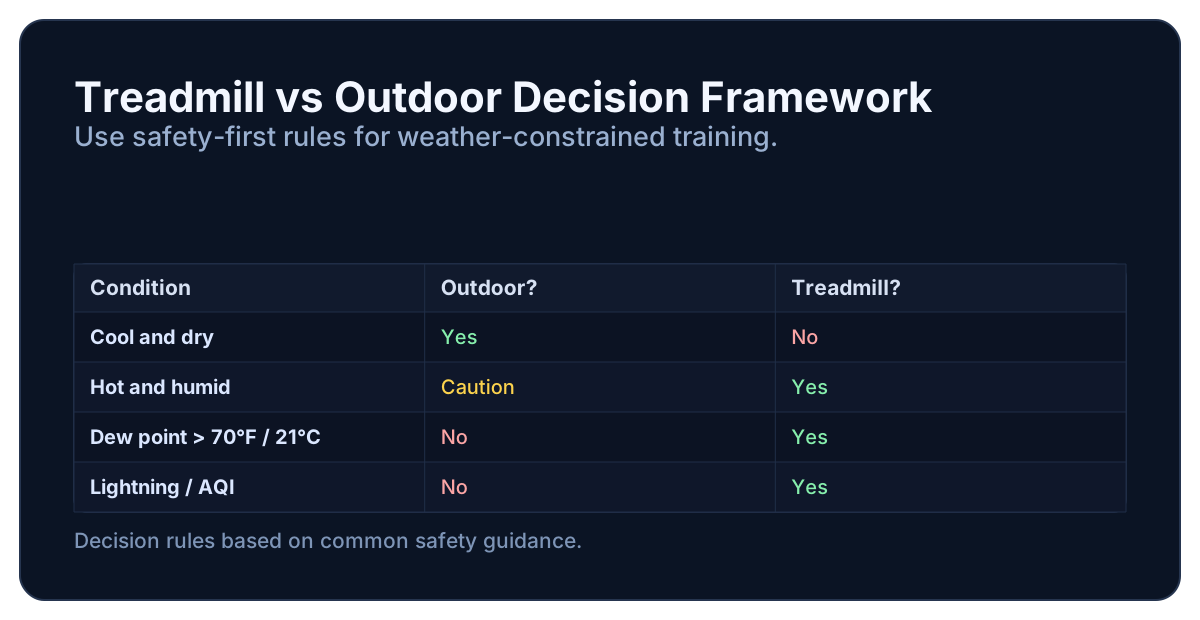
Chart sources: National Weather Service heat index safety, ACSM: Exercising in Hot and Cold Environments, Mantzios et al. weather and endurance performance (MSSE, 2022).
The rule I keep coming back to
If you would not race in these conditions, do not force quality training in them. Racing gives you aid stations, medical tents, and a finish line to justify the risk. A Tuesday workout gives you none of that, so the risk-reward is tilted even further against grinding it out. Save the grit for race day and let the treadmill protect the training.
How I use RunWeather for this
This is exactly the call I used to get wrong by feel, so I built RunWeather to make it on the numbers. It turns the raw forecast into a runner-specific read on whether to go out, eases that into an indoor-or-outdoor suggestion from dew point, heat index, air quality, and storm risk, and when the day is borderline it points at the hours where outside is actually worth it. The goal was never to talk myself onto the treadmill or off it. It was to stop pretending the conditions did not count.
Sources & Further Reading
- National Weather Service: Heat Index and Safety Guidance
- American College of Sports Medicine: Exercising in Hot and Cold Environments
- Mantzios et al. Effects of Weather Parameters on Endurance Running Performance: Analysis of 1258 Races (MSSE, 2022)
- Davis JJ. Calculating the effects of heat and humidity on marathon performance (Running Writings, 2025)
Related reading
RunWeather is available now on the App Store and Google Play.