Dew Point vs Humidity: Why Runners Keep Getting This Wrong
Humidity percentage can mislead runners. This guide explains why dew point is the better metric for pacing, effort, and safety.
Humidity is the most misunderstood weather metric in running.
It’s not that humidity is useless — it’s that most runners are using it incorrectly.
This article explains why humidity percentage fails, how dew point fixes that problem, and what runners should track instead.
The common mistake runners make
Runners often think:
“70% humidity is high, so this run will be hard.”
But that statement is incomplete.
Humidity percentage is relative to temperature. Dew point is independent of it.
That difference matters.
Same humidity, completely different run
Let’s look at two scenarios:
Scenario A
- Temperature: 60°F (16°C)
- Humidity: 70%
- Dew point: ~50°F (10°C)
Result: Sweat evaporates efficiently. Comfortable run.
Scenario B
- Temperature: 88°F (31°C)
- Humidity: 70%
- Dew point: ~77°F (25°C)
Result: Sweat sits on skin. Rapid overheating.
Same humidity percentage. Wildly different outcomes.
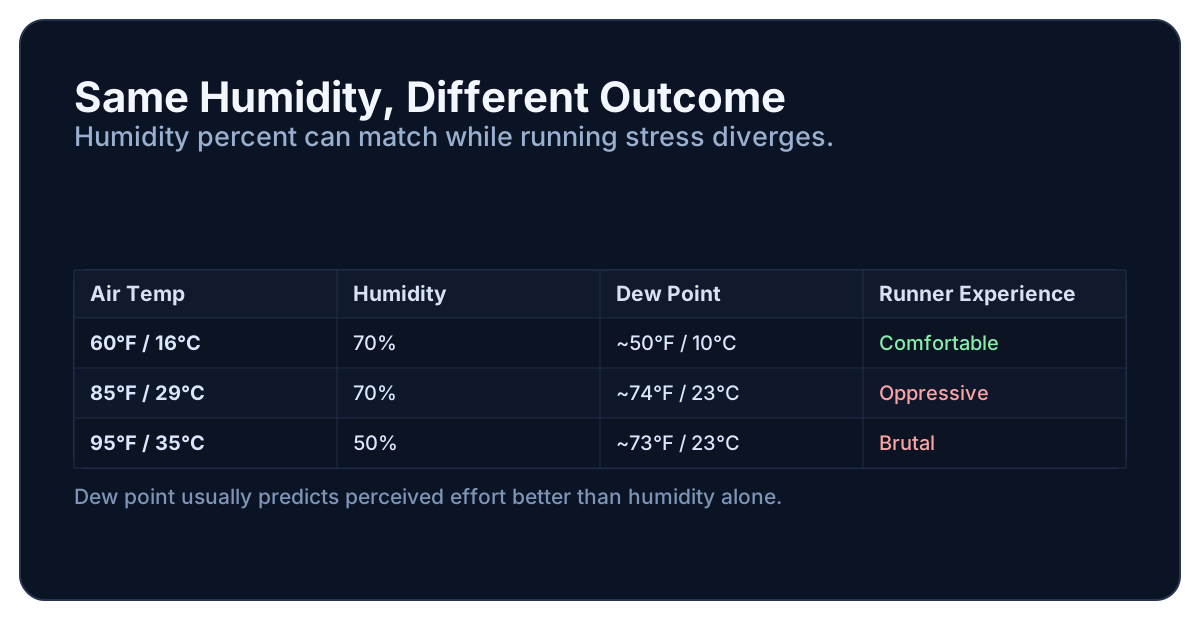
Chart sources: National Weather Service dew point guidance, American Meteorological Society dew point glossary, Periard et al. (Sports Medicine).
Why dew point predicts effort better
Your body cools by evaporation. Evaporation depends on the vapor pressure gradient between your skin and the air.
High dew point flattens that gradient.
Humidity percentage doesn’t tell you that. Dew point does.
That’s why:
- Runners feel “sticky” at high dew points
- Pace drops even when temperature seems reasonable
Why humidity % stuck around
Humidity percentage is:
- easy to explain
- visually familiar
- useful for general weather forecasts
It is not optimized for athletic decision-making.
That’s why serious endurance sports (running, cycling, triathlon) increasingly rely on dew point or wet-bulb temperature instead.
What runners should track instead
If you track only one moisture metric:
Track dew point. Ignore humidity percentage.
If you track two:
- dew point
- temperature
That combination predicts effort far better than heat index or humidity alone.
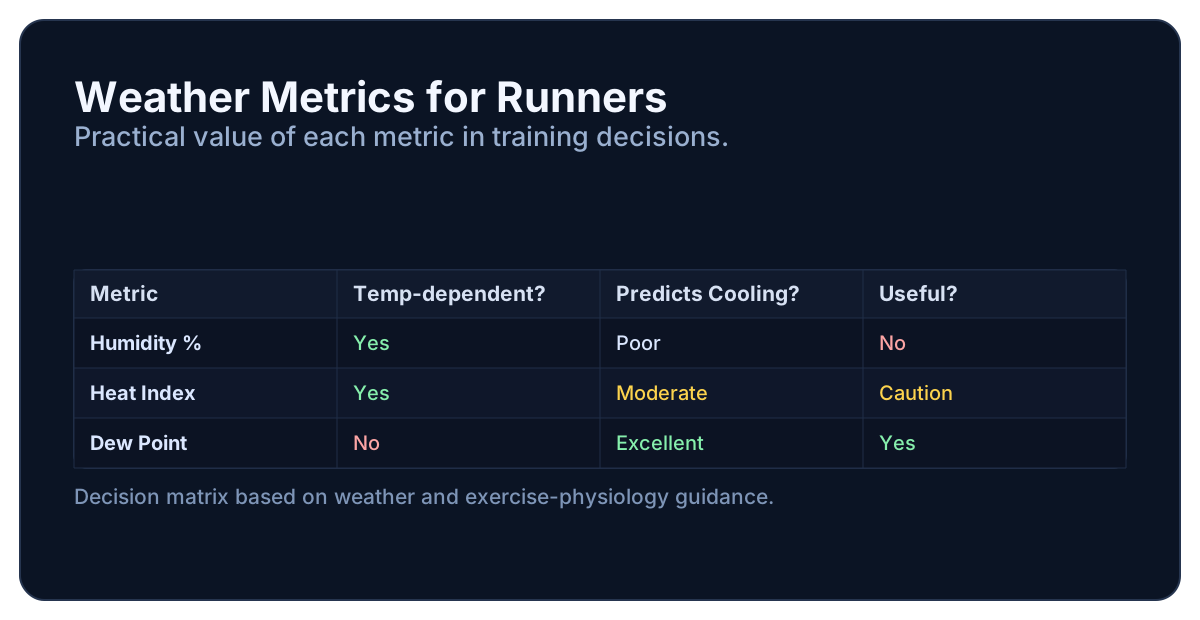
Chart sources: National Weather Service dew point guidance.
Practical takeaway
Stop asking:
“Is humidity high?”
Start asking:
“Can my body evaporate sweat today?”
Dew point answers that immediately.
Sources & Further Reading
- National Weather Service (NOAA): Dew Point vs Relative Humidity Explained
- American Meteorological Society: Dew Point (Glossary of Meteorology)
- Periard JD, Eijsvogels TMH, Daanen HAM. Exercise under heat stress: thermoregulation, hydration, and pacing (Sports Medicine)
Related reading
- Dew Point for Running: The Weather Metric That Actually Matters
- Dew Point Thresholds for Runners
- Best Time of Day to Run in Summer
RunWeather is currently in early access. Join the waitlist to get notified when we launch.