Hydration and Sodium for Hot Runs: A Dew Point-First Plan That Avoids Overdrinking
Humidity changes sweat cooling, not just sweat amount. Build a simple fluids + sodium plan by dew point, duration, and effort, with safety-first limits.
Short answer
Build a hot-run fluid plan around dew point, duration, and effort rather than a fixed number. A high dew point reduces sweat cooling, so you lose more for the same pace. Drink to thirst, add sodium on long or heavy-sweat efforts, and avoid overdrinking, which is riskier than mild dehydration.
For a long time my hot-run hydration came in two extremes: carry nothing and tough it out, or drink at every fountain until my stomach sloshed. Both left me worse off, dehydrated and cooked on one end, bloated and oddly weak on the other. The fix was not a magic number, it was realizing the plan has to move with three things: the dew point, which decides how well sweat cools me, the duration, which decides how long the strain piles up, and the effort, which decides how much heat I am making. Get those right and the bottle math mostly sorts itself out, without guessing.
Why dew point changes hydration risk
Dew point is a quick read on how full the air already is with moisture. NOAA and the NWS publish a runner-friendly version:
| Dew point | Typical feel | What it means for sweat |
|---|---|---|
| ≤ 55°F / 13°C | Dry, comfortable | Evaporation works well |
| 55–65°F / 13–18°C | Sticky | Evaporation is reduced |
| ≥ 65°F / 18°C | Very humid | Sweat often drips, heat builds |
When evaporation is throttled you can pour out sweat and get very little cooling for it, which drives heat strain, heart-rate drift, and a finish more depleted than the distance suggests.
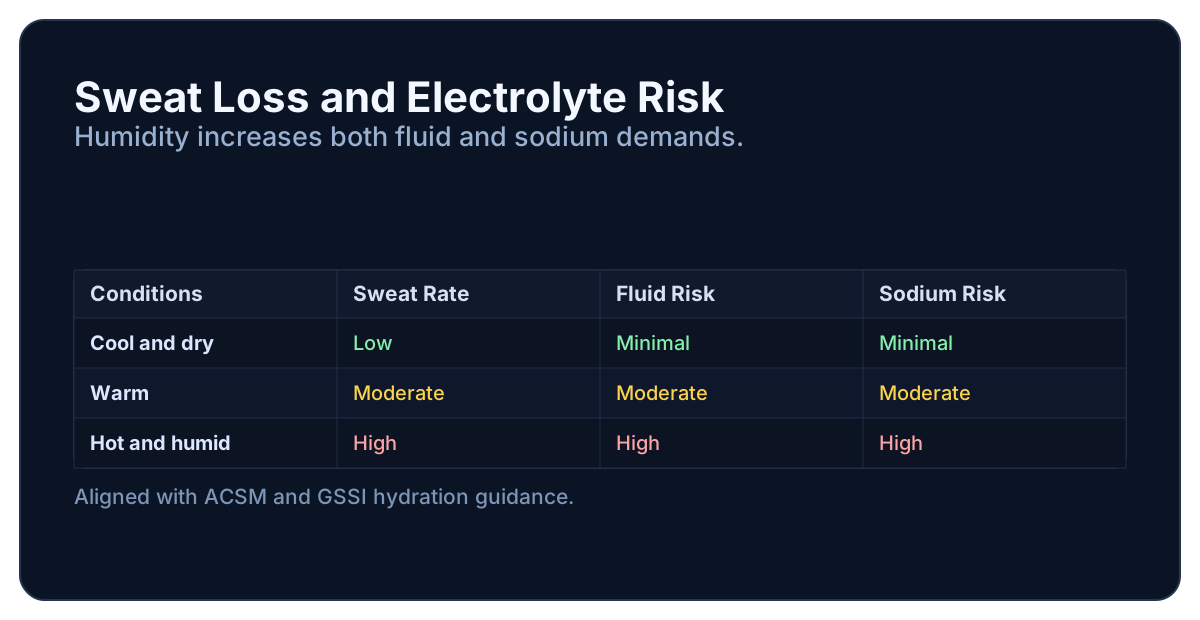
Sweat rate and electrolyte loss generally rise as conditions become hotter and more humid. Use this chart as a planning prompt, then personalize by sweat testing.
Two ways to get it wrong
Summer hydration fails on both sides. Drink too little and you dehydrate and add heat strain. Drink too much and the overload can tip you toward exercise-associated hyponatremia. Hydration research threads the gap: avoid serious dehydration, often framed as more than 2 percent of body mass lost, while also avoiding weight gain over a long event (Sawka et al.).
Quick sweat test you can do this week
You do not need a lab to sharpen the plan, just a scale and one honest run.
- Weigh yourself before the run, minimal clothing.
- Track how much you drink.
- Weigh yourself after, same clothing, towel off the sweat.
- Estimate sweat loss:
Sweat loss (L) ≈ (pre weight − post weight in kg) + fluids consumed (L)
Then divide by run hours for a rough L/hour. Do it on a low dew point day, a high dew point day, and one long run, and the differences usually surprise you.
A hydration strategy table you can execute
Treat it as a starting template, then tighten with your own sweat numbers:
| Run type | Typical conditions | Fluids | Sodium / electrolytes | Notes |
|---|---|---|---|---|
| < 60 min easy | Any | Drink to thirst | Usually none needed | Focus on timing and pace, not bottles |
| 60–120 min | Warm or humid | Small, frequent sips | Optional unless you sweat heavily | Practice what you will do on race day |
| > 2 hours | Hot and/or dew point ≥ 65°F | Plan intake, do not "wing it" | Often helpful to include electrolytes | Aim to finish steady, not wrecked |
| Race / hard workout | Any heat | Pre-plan bottles | Add sodium if you have high losses | Avoid new products on race day |
A CDC/NIOSH heat recommendation used all over safety guidance: for moderate activity in heat under about 2 hours, drink roughly 1 cup (8 oz) every 15–20 minutes, and for prolonged sweating over several hours, move to a sports drink with balanced electrolytes. It also warns against very high hourly intake, often about 6 cups per hour. Use it as a guardrail.
Sodium: when it helps, and when it is not the main problem
Sodium matters because your sweat carries it, but timing matters too. Occupational heat guidance notes you usually do not need electrolyte drinks in the first hour or two of heat, while over several hours of steady sweating a balanced electrolyte drink becomes worthwhile, kept dilute enough to absorb. Sodium earns its place when sessions are long, sweat rates are high, you know you lose a lot of salt, or you are running on mostly water and low-sodium food. A practical starting range many coaches use is 300–700 mg of sodium per hour on longer hot runs, adjusted by how much you cramp, how your gut tolerates it, your thirst and urine afterward, and your weight change.
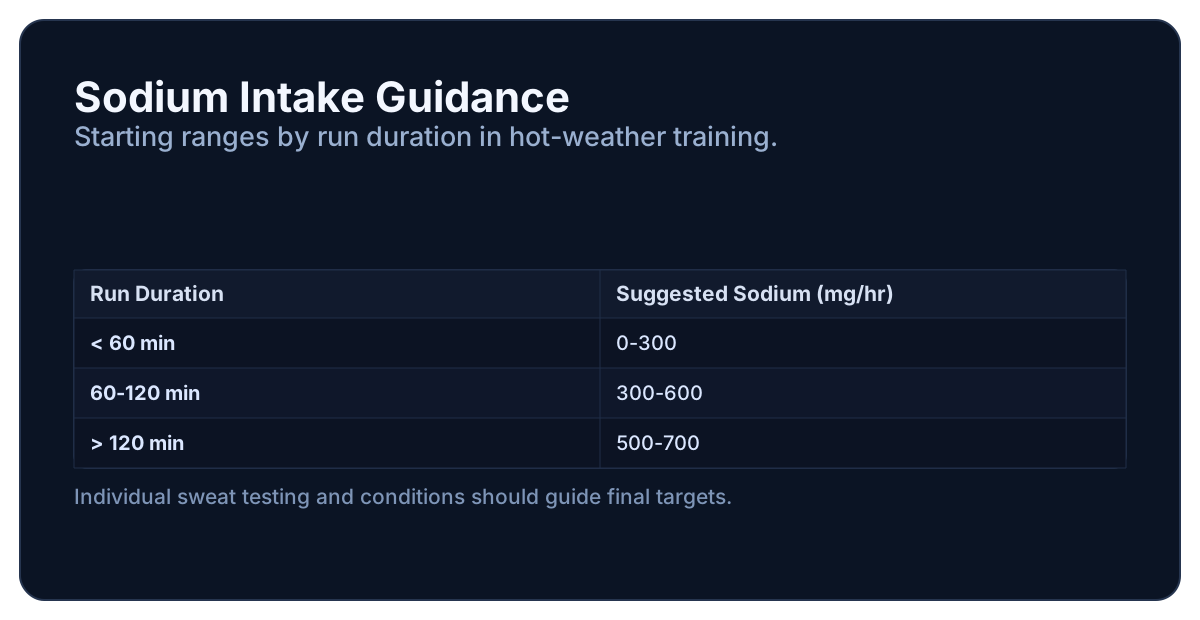
Start with ranges, then personalize using sweat loss, temperature, and dew point.
The overdrinking risk
Overdrinking is a real danger. The EAH consensus statement describes hyponatremia as low blood sodium, driven in most cases by relative excess total body water. In plain terms, forcing fluid down can hurt you: do not drink past comfort, do not gain weight over a long event, do not treat salt tablets as a default fix, and if the symptoms below show up, stop and get help.
Red flags to stop on
Stop early and cool down if you develop:
- confusion or disorientation
- dizziness that is getting worse
- chills, goosebumps, or stopped sweating in the heat
- a severe headache
- nausea or repeated vomiting
Heat illness can escalate quickly (ACSM: Exercising in Hot and Cold Environments).
Why I do this before the run, not after
Most runners do the hydration math after they suffer through it. I built RunWeather to do it beforehand: it reads the dew point so I know whether sweat will even cool me, flags the heat stress so I can downgrade the goal honestly, and points at the lower-load hours, with prompts so the bottles and electrolytes are not an afterthought.
Sources and further reading
- CDC/NIOSH: Heat Stress Recommendations (hydration guidance)
- CDC/NIOSH: Criteria for a Recommended Standard: Occupational Exposure to Heat (PDF)
- Hew-Butler et al. Exercise-Associated Hyponatremia Consensus Statement (BJSM)
- American College of Sports Medicine. Exercise and Fluid Replacement (Position Stand, Med Sci Sports Exerc, 2007)
- OSHA Heat Exposure: Water, Rest, Shade
- NOAA NESDIS: Humidity, Dew Point, and Comfort
Related reading
- Dew Point for Running
- How Much Slower Should You Run in Heat and Humidity?
- What to Wear Running in Heat and Humidity
- Best Time of Day to Run in Summer
RunWeather is available now on the App Store and Google Play.