Comparison
RunWeather vs Strava weather for runners
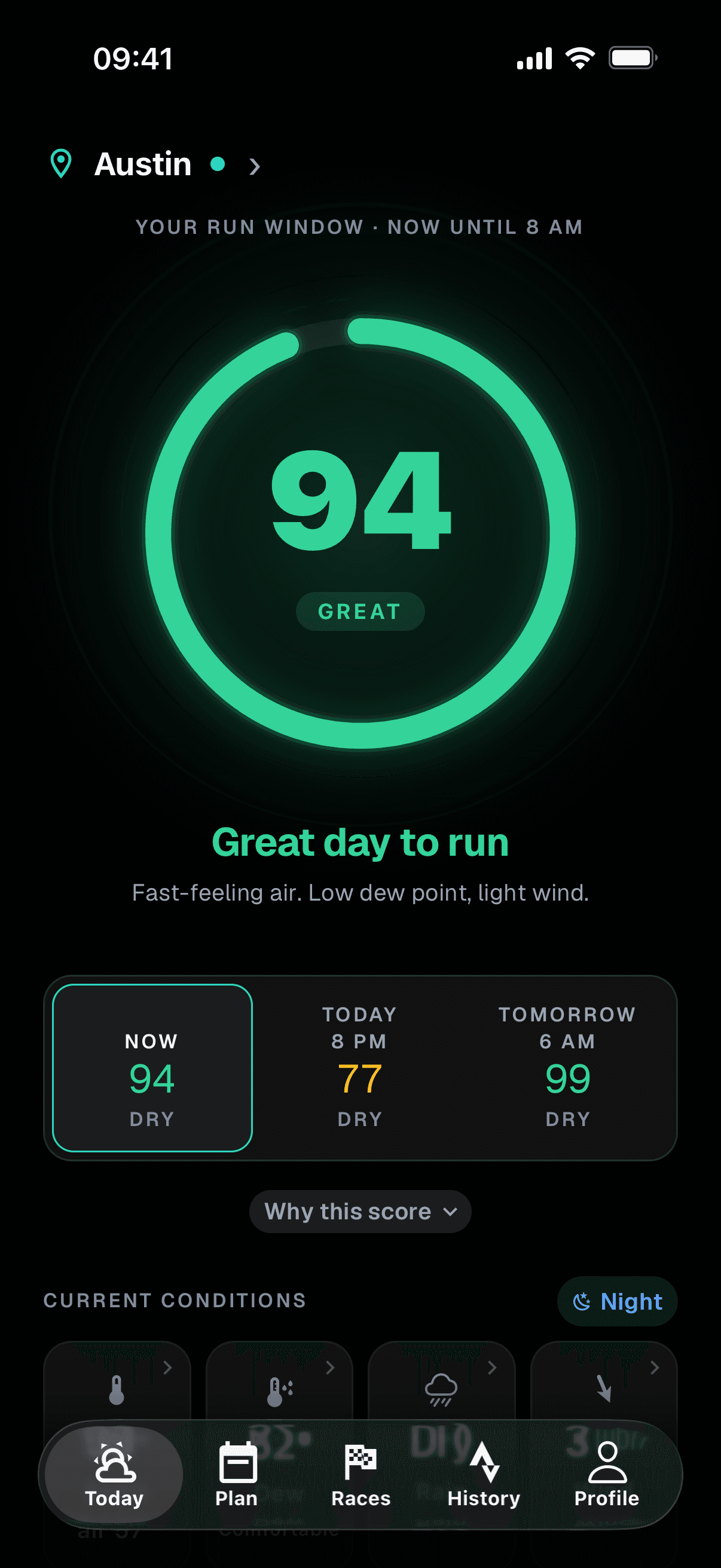
Strava records your run and, for subscribers, shows the weather during the activity from Apple WeatherKit data. Its help center describes no forecast before the run, no conditions score and no pace correction for heat (checked 28 October 2026). RunWeather does those parts: a 0-100 score for every forecast hour, the best time to run, and, once you connect Strava, what the weather added to your runs (the latest one free, every run with Pro). They do different jobs, and most runners who care about weather use both.
- ★★★★★5.080+ ratings
- 2,500+runners
- 100countries
Side by side
Feature-by-feature comparison
| Feature | RunWeather | Strava |
|---|---|---|
| Price | Free (optional Pro, $39.99/yr or $6.99/mo) | Free app; weather needs a subscription ($79.99/yr or $11.99/mo in the US) |
| Weather on completed runs | Yes, latest run free, every run with Pro | Subscribers: weather during the activity (Apple WeatherKit) |
| What the weather did to your pace | Yes, weather-adjusted pace (Pro) | No; Grade Adjusted Pace covers hills only |
| Forecast before your run | Yes, every hour scored 0-100 | Not described in its help center |
| Best time to run | Yes, best time each day | Not described in its help center |
| Dew point / WBGT heat strain | Core scoring inputs with safety caps | Not described in its help center |
| Where runs come from | Strava, Apple Health or Health Connect | Records runs itself; syncs Garmin, COROS, Polar and many more |
| Social feed, clubs, segments, routes | No | Yes, best in class |
| Training load and fitness trends | No; pair with Strava or your watch | Relative Effort, Fitness & Freshness, training log |
| Platforms | iOS and Android | iOS, Android, web, Apple Watch, Wear OS |
Strava is where most runners keep their training: the feed, clubs, segments, routes, Relative Effort and the training log. Its subscription adds weather: in Strava's words, the activity page "will display the weather during your activity", and you can hide it in display settings. Grade Adjusted Pace corrects your pace for hills.
Strava's help center and feature list do not describe a forecast before the run, a conditions score, or any pace correction for heat, humidity or wind (checked 28 October 2026). So a slow July tempo sits in your log looking like a bad day. RunWeather reads the same runs, from Strava, Apple Health or Health Connect, puts the dew point, heat strain and wind next to each one, and, with Pro, shows the weather-adjusted pace: what that effort was worth on a cool, still day.
Want the detail behind the scoring? How the Run Score works publishes every threshold the model uses.
When Strava's weather is enough
If you only want a record of what it was like out there, the weather on a Strava subscriber's activity does that, and everything else Strava does (social, segments, routes, training analysis) is well beyond what RunWeather tries. If you run at the same time every day whatever the weather, there is little for a forecast score to change.
When RunWeather earns its place
Two moments: before the run, while you can still pick the hour, and after a run that felt harder than the pace says. RunWeather covers both. It scores the coming days hour by hour so you can move a hard session to the better window, and it sets your Strava runs next to their dew point, heat strain and wind, with the pace that effort was worth on a neutral day (every run and the adjusted pace with Pro).
Keep going
Common questions
3 questionsDoes Strava show the weather on runs?
Yes, for subscribers. Strava lists weather as a subscription feature: the activity page shows the weather during your activity using Apple WeatherKit data, and you can hide it in display settings (checked 28 October 2026).
Does Strava adjust pace for heat or humidity?
Not according to its help center. Strava's Grade Adjusted Pace adjusts for hills. RunWeather's weather-adjusted pace makes the same kind of correction for heat, dew point and wind, so a hot run and a cool run can be compared fairly.
How does RunWeather work with Strava?
Connecting Strava is optional. Once connected, RunWeather reads your runs, matches them with the weather at their time and place, and shows what conditions added: your latest run free, every run with Pro. You can also skip Strava and read runs from Apple Health or Health Connect, and the forecast side needs no account at all.
Where the Strava facts come from
Checked 2026-10-28
Get this on every run, automatically
RunWeather syncs with Strava, plans your week, and learns your heat tolerance, so the right time to run finds you. Free on iPhone and Android.

On a computer? Scan with your phone camera to get the app.